Property intelligence for home buyers
Your property search companion
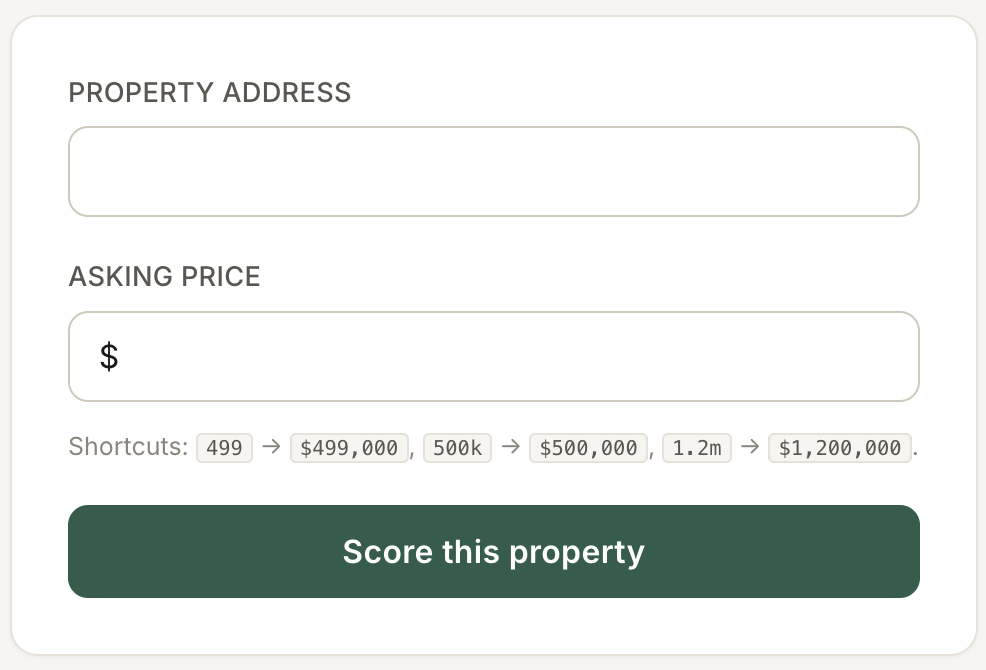
You’re on Zillow, Redfin, or any MLS site. You find a promising property. Paste the address into PriceTilt for the buyer-side analysis the listing won’t show you.
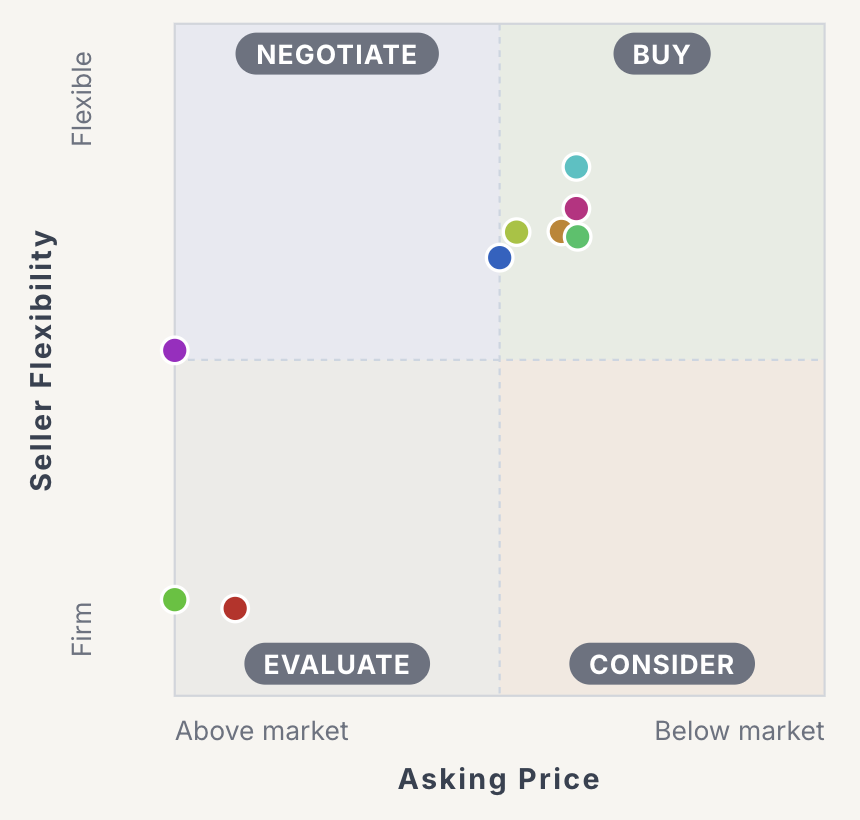
See where you stand: the Tilt Map
The Tilt Map places every property on two axes: how the asking price compares to fair value, and how flexible the seller is likely to be.
Data & Analysis. On demand.
PriceTilt surfaces the licensed property data and neighborhood intelligence first, then delivers a plain-English analysis of your negotiation position.
Licensed property data
- AVM (commercial Automated Valuation Model with % confidence)
- Market Value & Assessed Value
- Owner Equity & Occupancy
- Permits, Property Tax, Natural Hazards
Neighborhood intelligence
- Crime index & Pollution index
- Noise (traffic, airports, local)
- Owner-occupancy % & Vacancy %
- Commute time, Median income, Education
Buyer’s analysis
- Asking price vs. AVM
- Owner equity & motivation
- Negotiation position analysis
- Offer range & strategy
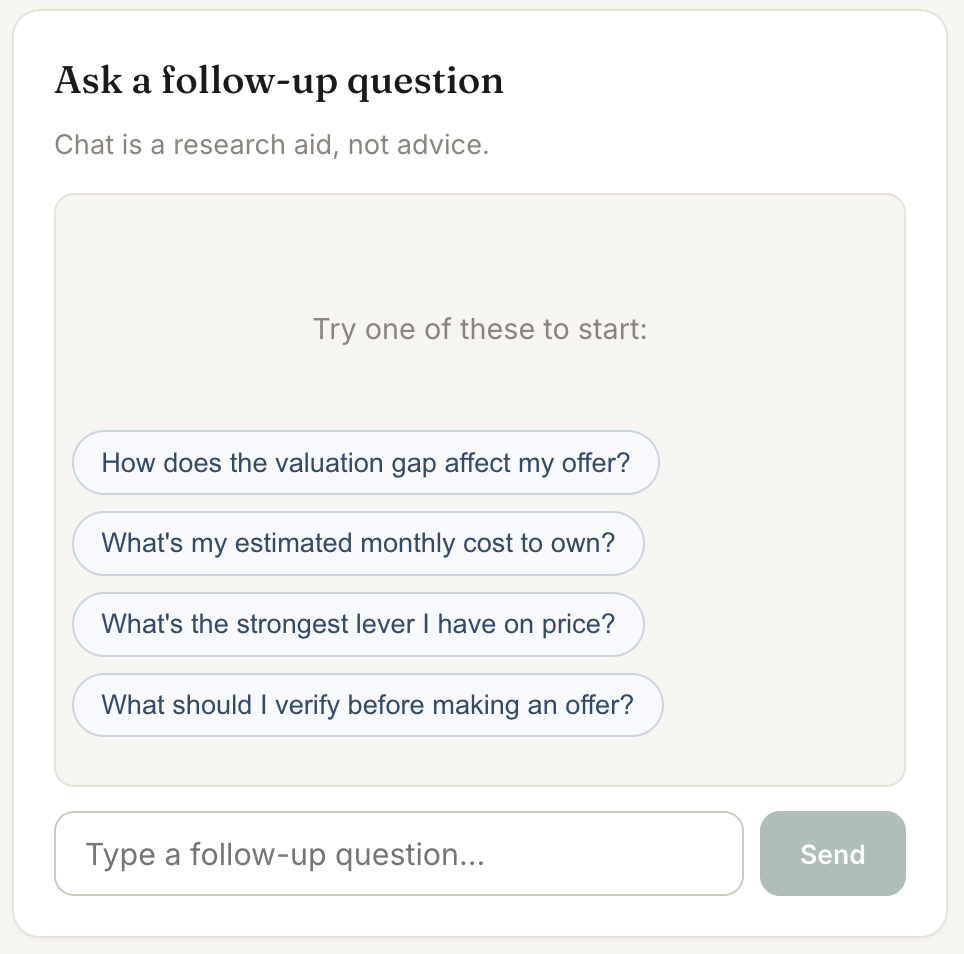
Go deeper with AI follow-up
AI answers using records for that property.
Different from a Zestimate?
Zestimate
What is this property worth?
Useful for market value. Doesn’t tell you whether the seller will negotiate, or by how much.
PriceTilt
Will the seller negotiate, and how much room is there?
Built on owner-motivation signals, market context, and licensed data most buyers never see.
Free to start. Pro when serious.
Every free account gets 1 free Pro report on the property of your choice. Unlock everything on that address, keep it forever, and only upgrade when you’re researching more.
| PriceTilt Free | PriceTilt Pro | |
|---|---|---|
| AI buying-agent summary on any address | ✓ (unlimited) | ✓ (unlimited) |
| Negotiation framing & due-diligence guidance | ✓ | ✓ |
| Public / MLS facts | ✓ | ✓ |
| Verified Tilt Map, exact negotiation position + AI offer range | — | ✓ |
| Owner & equity profile, balance, equity, tenure, motivation signals | — | ✓ |
| Price | $0 | $29/mo |
Your first Pro report is on us. Cancel anytime, no auto-renew traps, no cancellation runaround. Subscribe while you're shopping, cancel the moment you close.
Try it on a property.
Free AI summaries on any address, no credit card. Your first Pro report is on us.